





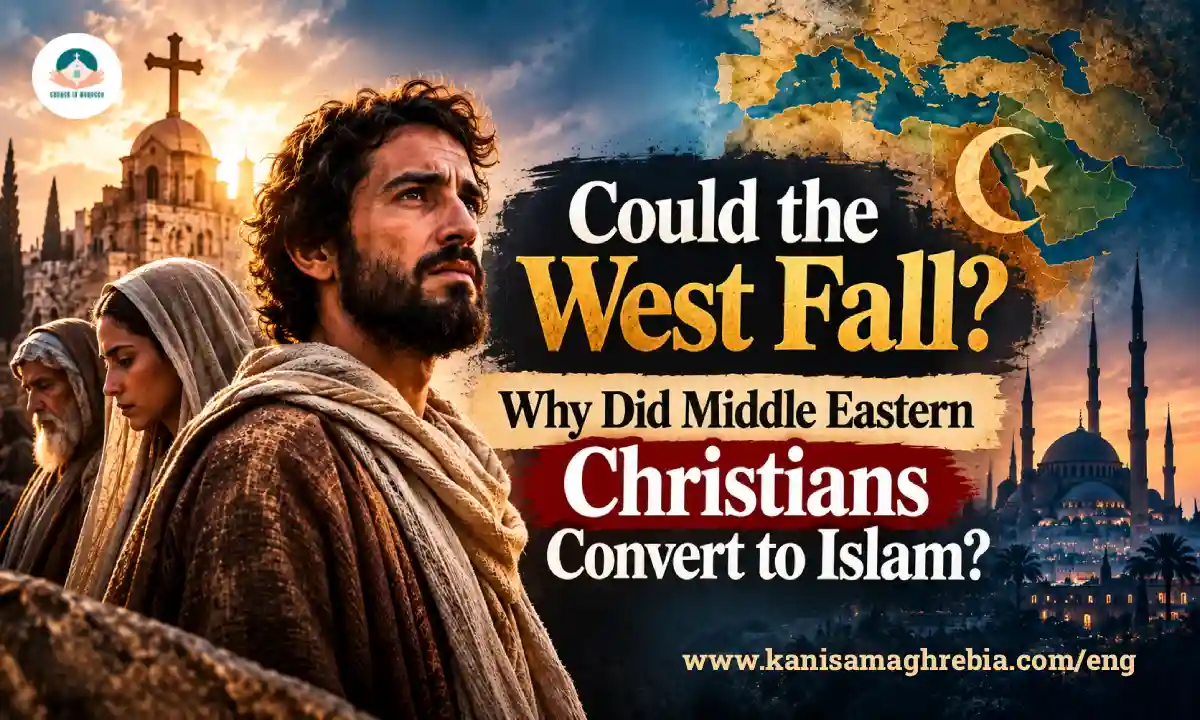
I often look at a map of the modern Middle East and feel a profound, lingering ache. If you trace your finger across the borders of Syria, Egypt, Iraq, and Turkey today, you are touching the soil that birthed our faith. These are the lands of the patriarchs, the apostles, and the early church fathers. Yet, today, the Christian presence there is a fractured, embattled minority. Why did a region once saturated in the blood of martyrs and the brilliance of theologians quietly surrender its theological inheritance? We frequently insulate ourselves from this historical trauma by assuming that the West is somehow immune to such a collapse, or by resting on simplistic caricatures of how the East fell. We must stop.
To understand our present vulnerabilities, we must ask: Why did Middle Eastern Christians convert to Islam?
The Historical Reality: Christians in the Middle East converted to Islam over several centuries primarily due to the socio-economic exhaustion of the dhimmi system, the heavy financial burden of the jizya tax, systemic social marginalization, and theological confusion, rather than instantaneous forced conversion. The Church was not defeated overnight by the sword; it was slowly suffocated by centuries of structural pressure.
This history is not merely an academic exercise. It is a mirror. If we are to illuminate the path forward for a western Church currently stumbling in the dark of secularism, we must methodically examine where, how, who, why, and when the East fell.
When the East Was Christian: A Forgotten Reality
It is a symptom of our intellectual isolation in the West to assume that Christianity has always been a fundamentally European religion. It has not. For six centuries before the rise of Islam, the center of the Christian faith was not Rome, Geneva, or London. It was Antioch. It was Alexandria. It was Damascus.
These cities were the theological engines of the world. They produced the creeds we recite, the apologetics we rely upon, and the monastic traditions that preserved Western civilization. The Byzantine and Sassanid empires housed millions of Christians who spoke the dialects of Christ and the apostles. The East was not a fragile outpost of faith; it was the impenetrable fortress of it. Yet, today, historians like Philip Jenkins rightly categorize this shift as one of the greatest vanishing acts in human history. How does a fortress crumble from within?
How the Crescent Rose: The Mechanics of Islamization
When approaching this history, we are often handed two competing, equally false narratives. The secular myth proposes a romanticized “Golden Age” of Islamic rule where Christians lived in unhindered, multicultural harmony. Conversely, the reactionary narrative suggests that invading armies lined up millions of Christians and forced them to convert at the edge of a sword in a single bloody afternoon. Both are historical caricatures that insult the true suffering of our ancestors.
The mechanism of Islamization was far more insidious, deliberate, and agonizing. It was a strategy of systemic attrition.
The Myth of the Sword vs. The Reality of Exhaustion
While the initial 7th-century Islamic conquests were undoubtedly military, the mass conversions of the populace took centuries. The strategy was not immediate martyrdom, which often galvanizes the Church, but generational exhaustion. Over hundreds of years, the governing authorities created an environment where remaining Christian required a heroic, daily sacrifice, while converting offered immediate economic, social, and political relief.
The Dhimmi System and the Jizya Tax
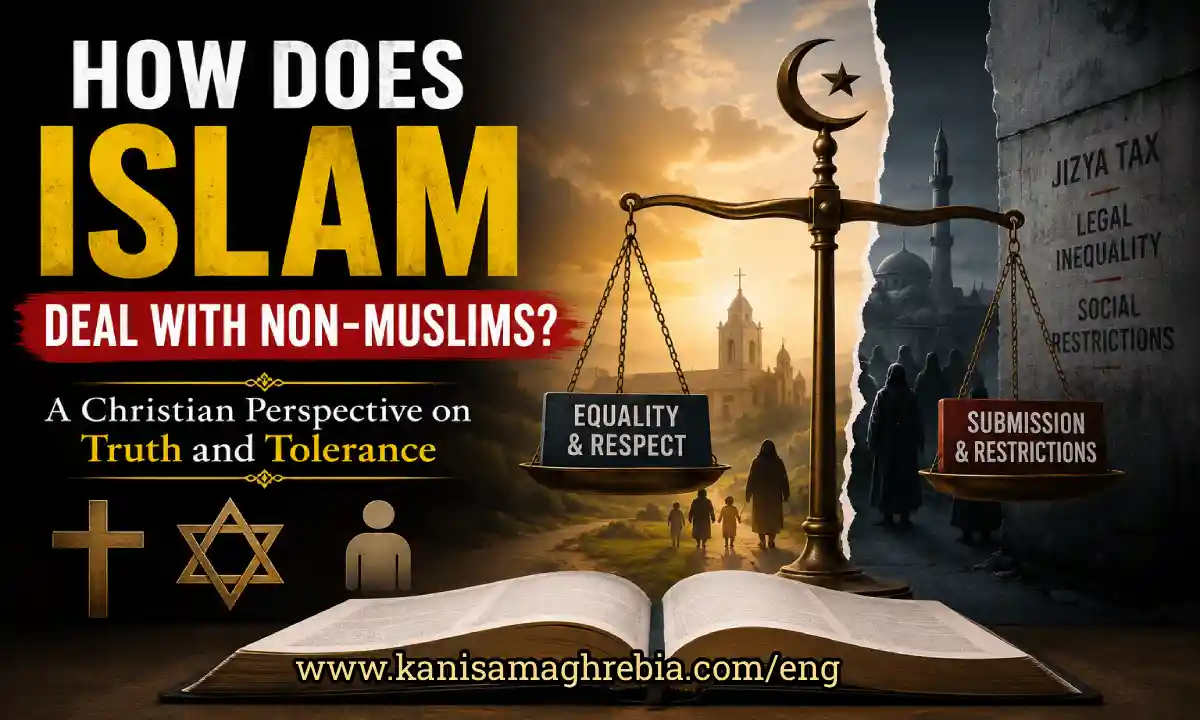
The engine of this cultural erasure was Islamic law regarding minorities. Christians were designated as dhimmis, a legally protected, but explicitly second-class status. To maintain this status, Christians were required to pay the jizya, an annual tribute tax levied exclusively on non-Muslims.
This was not a mere administrative fee; it was designed to be humiliating and financially ruinous. If a Christian father could not pay the jizya, his family faced imprisonment, enslavement, or forced conversion. Furthermore, dhimmis were legally barred from building new churches, ringing church bells, bearing arms, or holding meaningful public office. Their testimony was worth less in court.
Consider the psychological weight of this. A Christian family might endure poverty and humiliation for one generation, perhaps two. But by the third or fourth generation, the temptation to simply declare the Shahada (the Islamic profession of faith) to save one’s children from starvation and social ostracization became overwhelming. They did not lose their faith in a debate; they lost it to exhaustion.
Theological Confusion and Syncretism
We must also address the internal weakness of the Church at that time. Decades of vicious, localized theological infighting had left the Eastern Church fractured. When Islam arrived, it did not initially present itself to the average peasant as a radically foreign religion. It presented itself as a simplified, “practical” monotheism.
Even brilliant theologians like St. John of Damascus initially categorized Islam not as a new world religion, but as a Christian heresy, a misunderstanding of the Trinity and the Incarnation. Because many Christians lacked deep theological literacy, they fell prey to syncretism. They believed they were merely adopting a culturally expedient form of monotheism. Without a rigorous, deeply rooted understanding of why the divinity of Christ matters, a culturally convenient lie easily replaced a socially costly truth.
Who Survived? The Remnant of the East
It is vital to state that the Church in the Middle East was never entirely erased. We owe a debt of profound reverence to the Copts of Egypt, the Assyrians of Iraq, and the Syriac believers of the Levant. These communities refused to capitulate. They paid the jizya. They endured the pogroms. They bore the scars of second-class citizenship for fourteen centuries. They survived because they held fiercely to their liturgy, their theological distinctives, and their communal identity. They refused to assimilate into the broader, hostile culture.
Could the West Fall? The Parallels We Dare Not Ignore
We arrive at the righteous frustration we must turn upon ourselves. Do we truly believe our cathedrals will remain full simply because they are grand? Are we so arrogant as to think the geographic preservation of Western Christianity is a divine guarantee?
Christ himself issued a terrifying warning to the churches of Asia Minor churches located in what is now modern, Islamic Turkey. In Revelation 2:5, He warns the church in Ephesus: “Remember therefore from where you have fallen; repent, and do the works you did at first. If not, I will come to you and remove your lampstand from its place.”
The Bible promises that the gates of hell will not prevail against the universal Church. It does not promise that the lampstand of a specific region, nation, or culture will not be removed if it abandons its first love. The parallels between the fallen East and the modern West are stark and terrifying.
The Vacuum of Secularism
The Eastern Church fell to a competing religious ideology. The West is currently falling to secularism. But human nature abhors a spiritual vacuum. Secularism is merely the solvent stripping away our cultural Christianity; it is not the foundation that will replace it. As the West becomes post-Christian, it is becoming increasingly vulnerable to aggressive, cohesive ideologies whether they be militant secularism, resurgent paganism, or demographic shifts leaning toward Islam.
Demographic Shifts and Institutional Weakness
Just as the Byzantine Christians assumed their empire would last forever, Western Christians have lazily relied on the momentum of “Judeo-Christian values” to do the work of evangelism for them. We have surrendered the public square. We have allowed our institutions to be co-opted. We are experiencing our own form of social dhimmitude where orthodox Christian beliefs are increasingly treated as a disqualification for public office, academia, and cultural influence.
The Danger of Theological Illiteracy
The most chilling parallel is our epistemological collapse. Just as the Eastern peasants were easily swayed by the simplified monotheism of Islam due to a lack of deep catechesis, the modern Western Church is drowning in theological illiteracy. We have traded the robust, methodical doctrines of the historic faith for therapeutic moralism and emotionalism. When a culture demands that you suffer for your faith, a shallow theology will inevitably yield to cultural assimilation. As Jesus warned in Matthew 24:12-13, “Because lawlessness is increased, most people’s love will grow cold. But the one who endures to the end, he will be saved.”
Conclusion: Why Did Middle Eastern Christians Convert to Islam?
We cannot read the history of the Islamization of the Middle East and remain comfortable. The erosion of the Christian East was a tragedy of attrition, a slow bleeding out of a people who forgot how to hold the line against a hostile culture.
The Western Church must awaken from its parochial slumber. We must stop outsourcing our discipleship to the culture. We must rebuild thick, resilient communities that are methodically trained in apologetics, historically rooted in theology, and prepared to endure social marginalization without capitulating. The lampstand of the West is flickering. If we are to keep the flame alive, we must possess the courage to look at the ruins of the East, mourn what was lost, and resolve, by the grace of God, to endure to the end.
Frequently Asked Questions (FAQ): Why Did Middle Eastern Christians Convert to Islam?
Why did the Middle East change from Christian to Muslim?
The transition occurred over centuries due to the collapse of the Byzantine and Sassanid empires, the military conquests of the Islamic Caliphates, and the implementation of a socio-economic system that heavily penalized Christians while rewarding conversion to Islam.
Were Middle Eastern Christians forced to convert to Islam?
While instances of violent forced conversion occurred especially during periods of political instability the vast majority of Christians converted gradually over centuries to escape the crushing financial burden of the jizya tax and the social humiliation of dhimmi status.
What was the jizya tax on Christians?
The jizya was an annual per-capita tax levied by Islamic states on non-Muslim subjects (dhimmis). It was a financial requirement to practice their faith and receive state protection. For many impoverished Christians, the tax eventually became impossible to pay, forcing them to convert.
What is a dhimmi in Islamic history?
A dhimmi is a non-Muslim citizen living in an Islamic state. While granted the right to life and property, dhimmis were legally second-class citizens subject to strict social restrictions, higher taxation, and legal disadvantages designed to assert Islamic supremacy.
How did early Christians view Islam?
Many early Christians, including theologians like St. John of Damascus, initially viewed Islam not as an entirely new religion, but as a Christian heresy. Because Islam acknowledged Jesus as a prophet but denied His divinity and crucifixion, early apologetics treated it as a distortion of Christian doctrine.
Could a historically Christian nation in the West become Islamic?
History demonstrates that entrenched Christian cultures can be erased. With the rise of secularism creating a spiritual vacuum, declining birth rates among native populations, and shifting demographics, Western nations are highly susceptible to major religious and cultural transformations.
What can Western Christians learn from the fall of the Eastern Church?
Western Christians must learn that cultural dominance is never permanent. The survival of the faith depends on robust theological literacy, deep communal resilience, and a willingness to endure social and economic marginalization rather than compromising biblical truth.