









Introduction:
Embarking on a logical exploration of the Trinity, we delve into Christian theology’s depths, unraveling God’s nature as Father, Son, and Holy Spirit. This journey, marked by clarity, precision, and a scholarly approach, illuminates the transformative impact of understanding the Triune God.
A. The Trinity, a cornerstone of Christian theology, encapsulates the profound nature of the Divine. It is an intricate concept that seeks to articulate the nature of God as Father, Son, and Holy Spirit, three distinct persons existing in perfect unity. This understanding is rooted in biblical passages that depict God’s triune nature, such as the baptismal formula in Matthew 28:19 and the Apostle Paul’s benediction in 2 Corinthians 13:14. The Trinity is not a mathematical puzzle to solve but a framework attempting to grasp the complexity of God’s being.
B. The significance of comprehending the Trinity in Christian theology cannot be overstated. It serves as the lens through which believers view the nature of God, shaping their understanding of God’s character and interactions with humanity. The Trinity highlights the relational aspect within the Godhead, emphasizing love, unity, and cooperation among the Father, the Son (Jesus Christ), and the Holy Spirit. It provides a comprehensive understanding of God’s engagement in creation, salvation, and ongoing relationship with His people.
C. Yet, the mystery of the Trinity remains a challenge for believers. While the Bible affirms the triune nature of God, the human mind grapples with the intricacies of three persons in one divine essence. This challenge is not a deficiency in the concept itself but an acknowledgment of the limitations of human understanding in comprehending the infinite nature of God. The mystery invites humility and awe, prompting believers to approach God with reverence and an acknowledgment that there are aspects of God’s nature that surpass our comprehension. As we delve into this theological exploration, we embark on a journey of faith, recognizing that some aspects of God’s revelation transcend our intellectual capacities, inviting us to trust in the depth of God’s wisdom and love.
The Foundation of Monotheism:
At the heart of Christian theology lies a profound acknowledgment of the oneness of God, a concept that forms the very foundation of monotheism. This foundational principle is deeply embedded in the biblical narrative, echoing the words of Deuteronomy 6:4, which declare, “Hear, O Israel: The Lord our God, the Lord is one.” This succinct proclamation encapsulates the core tenet of monotheism, affirming the absolute unity of God.
The significance of monotheism in Christianity cannot be overstated, as it distinguishes the faith from polytheistic belief systems. The monotheistic foundation provides a theological anchor, shaping the understanding of God’s nature as singular, eternal, and omnipotent. It serves as the lens through which Christians interpret the entirety of Scripture, recognizing the consistent affirmation of one God throughout both the Old and New Testaments.
The cause and effect relationship between the foundational monotheistic belief and subsequent theological developments is evident. The monotheistic understanding of God lays the groundwork for the intricate concept of the Trinity. While the Father, Son, and Holy Spirit are distinct persons within the Trinity, the oneness of God ensures that their divine essence remains undivided. This unity in diversity reflects the richness of the Christian understanding of God, intricately balancing the complexities of the divine nature.
In embracing monotheism, believers are called to recognize the singularity and uniqueness of God, fostering a deep sense of reverence and awe. It shapes the Christian worldview, influencing ethics, morality, and the understanding of the purpose of human existence. The acknowledgement of one God becomes the starting point for a holistic engagement with the Christian faith, establishing a firm and coherent theological framework that underpins the entire narrative of God’s interaction with humanity.

The Father: Source of All:
The exploration of the Trinity naturally leads us to the foundational role of the Father within this divine framework. In Christian theology, the Father is depicted as the ultimate source of all existence, the prime mover, and the sovereign architect of the cosmos. This concept is deeply rooted in biblical teachings that emphasize God’s role as the Creator and sustainer of the universe. For instance, Genesis opens with the proclamation, “In the beginning, God created the heavens and the earth,” setting the stage for understanding the Father as the originator of all that exists.
The Father’s significance extends beyond the act of creation; it permeates the entire biblical narrative. Throughout both the Old and New Testaments, we encounter descriptions of God’s paternal care, guidance, and provision for His people. The metaphor of God as a loving and protective Father is vividly portrayed in passages like Psalm 103:13, where it says, “As a father has compassion on his children, so the Lord has compassion on those who fear him.”
This paternal role takes on profound meaning in the context of the Trinity, where the Father is not merely a distant creator but actively engaged in the ongoing narrative of human history. The Father initiates the divine plan of redemption, sending the Son, Jesus Christ, into the world to reconcile humanity to Himself. The cause and effect relationship here is pivotal: the Father’s love and desire for relationship lead to the redemptive work of the Son on the cross.
Understanding the Father as the source of all prompts believers to recognize their dependence on God for life, purpose, and meaning. It establishes a foundational understanding of God’s character as benevolent, wise, and intimately involved in the affairs of His creation. This comprehension of the Father sets the stage for a holistic understanding of the Trinity, emphasizing the unity of purpose among the Father, the Son, and the Holy Spirit in the grand narrative of God’s unfolding plan for humanity.
The Son: Incarnate Word and Redeemer:
In delving into the theological understanding of the Trinity, a pivotal figure emerges in the person of the Son Jesus Christ. At the core of Christian belief is the affirmation that the Son is not merely a human prophet or teacher but the Incarnate Word, embodying the divine in human form. This profound concept finds its roots in the Gospel of John, declaring, “In the beginning was the Word, and the Word was with God, and the Word was God” (John 1:1). This foundational statement establishes the pre-existence and divinity of the Son, setting the stage for His redemptive mission.
The significance of the Son as the Incarnate Word and Redeemer is intricately woven into the fabric of Christian theology. The cause-and-effect relationship between the divine initiative and human salvation unfolds through the life, death, and resurrection of Jesus Christ. The Son’s incarnation, as articulated in John 1:14, reveals the divine decision to dwell among humanity, bridging the gap between the eternal God and finite humanity.
The redemptive mission of the Son finds its climax in the crucifixion a moment where divine love intersects with human brokenness. The cause of redemption stems from God’s desire to reconcile fallen humanity to Himself, and the effect is the transformative power of forgiveness and restoration. The Apostle Paul succinctly captures this cause-and-effect dynamic in Romans 5:8, stating, “But God demonstrates his own love for us in this: While we were still sinners, Christ died for us.”
Understanding the Son as the Incarnate Word and Redeemer has profound implications for believers. It illuminates the depth of God’s love and the cost of redemption. The simplicity of the message, devoid of jargon, aims to convey the accessibility of the Christian faith, encouraging a relational engagement with the divine story of Incarnation and Redemption.
The Holy Spirit: God’s Presence and Power:
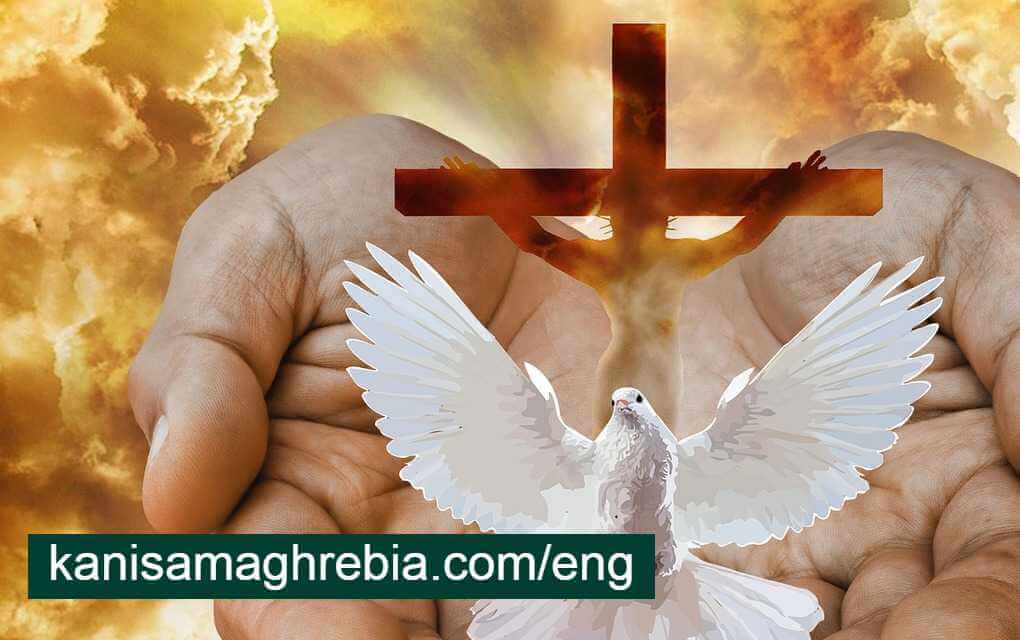
In the intricate tapestry of the Trinity, the Holy Spirit emerges as a vital and dynamic presence, embodying God’s active involvement in the world. The Scriptures portray the Holy Spirit not as an abstract force but as a personal entity, a divine advocate and guide. The cause-and-effect relationship is discernible in the biblical narrative, where the Spirit’s presence and power bring about transformative effects in the lives of individuals and the community of believers.
The foundation of understanding the Holy Spirit rests on recognizing its role as the active agent of God’s divine influence. This influence is evident from the opening verses of Genesis, where the Spirit hovers over the waters of creation, to the outpouring of the Spirit on the day of Pentecost, as recorded in Acts 2. In both instances, the cause is God’s desire to bring order to chaos and empower His people for service, and the effect is the manifestation of God’s presence and power in the created order and the lives of believers.
The Holy Spirit’s involvement extends beyond creation to the realm of human experience. Throughout the Old Testament, the Spirit is portrayed as empowering individuals for specific tasks, whether it be the judges, prophets, or kings. In the New Testament, the cause of the Spirit’s activity is rooted in the redemptive work of Christ, and the effect is the indwelling of believers, guiding, comforting, and empowering them for righteous living.
Recognizing the Holy Spirit as God’s presence and power has practical implications for believers. The scholarly emphasis on the cause and effect relationship seeks to illuminate the coherent narrative of God’s ongoing engagement with humanity. Inviting believers to cultivate a responsive relationship with the Spirit, acknowledging its transformative work in their lives. This understanding provides a foundation for a vibrant and empowered Christian life, rooted in the awareness of God’s abiding presence and the dynamic power of the Holy Spirit.

The Interconnectedness of the Trinity:
Delving into the intricate dynamics of the Trinity, we encounter a profound truth, the interconnectedness of the Father, the Son, and the Holy Spirit. This interconnection is not a mere theological abstraction but a relational dance within the Godhead, reflecting unity in diversity. Understanding this intricate bond involves recognizing the mutual indwelling, a concept known as perichoresis.
The cause of this interconnectedness lies in the eternal nature of God. From eternity past, the Father, Son, and Holy Spirit have existed in perfect communion. This eternal fellowship is the wellspring from which the Trinity’s unity flows. The effect is a divine community characterized by self-giving love, shared purpose, and perfect harmony. The interconnectedness of the Trinity becomes a model for human relationships, emphasizing unity amid diversity.
Examining the biblical narrative reveals the practical outworking of this interconnectedness. The Gospels depict Jesus speaking of His oneness with the Father, exemplifying a seamless relationship. The cause here is the divine intention for a unified mission, and the effect is the revelation of God’s character through the life and teachings of Jesus. Likewise, the Holy Spirit, sent by the Father and the Son, further solidifies this interconnected divine involvement by indwelling believers, guiding and empowering them.
The interconnectedness of the Trinity underscores the cohesive narrative of God’s redemptive plan. It illuminates the beauty of God’s diverse persons working in tandem for the salvation of humanity. The scholarly lens reveals the logical consistency in this theological framework, inviting believers to appreciate the profound simplicity within the complexity of the Trinity.
This understanding is not meant to perplex but to inspire a deeper appreciation for the God who invites us into the divine dance, where unity and diversity coalesce in a beautiful tapestry of love and purpose.
Logical Challenges and Paradoxes in Exploration of the Trinity:
In our exploration of the Trinity, we inevitably encounter logical challenges and paradoxes that can both fascinate and perplex the human mind. The cause of these challenges lies in the attempt to articulate the infinite nature of God within finite human language and understanding. The effect is a tension, a recognition that certain aspects of God’s revelation transcend our logical frameworks.
One notable challenge is the apparent tension between the oneness and threeness of God within the Trinity. The cause of this tension is our finite language’s struggle to encapsulate the divine mystery adequately. The effect is the paradoxical affirmation that God is both one and three, an intellectual puzzle that, while seemingly contradictory, underscores the richness of the divine nature.
Another challenge arises when contemplating the roles of the Father, Son, and Holy Spirit. The cause of this challenge lies in our linear thinking, desiring a neat categorization of roles within the Godhead. The effect is the recognition that each person of the Trinity is fully involved in every divine action, no hierarchical division, but a harmonious collaboration.
Navigating these challenges requires humility and a recognition of the limits of human reason. While the cause of these challenges rests in our attempts to encapsulate the divine, the effect is an invitation to embrace the mystery and engage in a faith journey that transcends mere intellectual comprehension. The paradoxes within the Trinity do not diminish the logical coherence of the Christian worldview but highlight the inadequacy of human language to fully articulate the divine reality.
The purpose of discussing this subject about exploration of the Trinity, to recognize and appreciate the allure that lies within the realm of the unknown. The scholarly lens illuminates the logical consistency within the paradoxes, inviting believers to grapple with the tension as an integral aspect of faith. This understanding fosters a sense of wonder, encouraging individuals to embrace the mystery of the Trinity with reverence and awe, recognizing that, in the grand tapestry of Christian theology, certain threads are too intricate for our finite minds to unravel completely.
Practical Implications for Believers:
The theological exploration of the Trinity extends beyond abstract concepts to the realm of practical implications for believers. The cause-and-effect relationship between understanding the Trinity and its impact on daily Christian living is profound. At its core, recognizing the Father, Son, and Holy Spirit has practical ramifications for worship, prayer, and the dynamics of interpersonal relationships within the faith community.
The cause of these practical implications is the acknowledgment that the Godhead is not a distant, impersonal force but a triune God deeply invested in relationship. The effect is a transformed approach to worship, wherein believers engage with God in a relational manner. Instead of a ritualistic exercise, worship becomes a response to the loving communion within the Trinity.
Prayer, too, is fundamentally influenced by the understanding of the Trinity. The cause is the recognition that believers can approach God not only as the Almighty Creator (the Father) but also as the empathetic Redeemer (the Son) and the empowering Comforter (the Holy Spirit). The effect is a richer prayer life, encompassing gratitude, confession, and supplication with a nuanced awareness of God’s multifaceted nature.
The interconnectedness of the Trinity also has significant implications for community life among believers. The cause lies in the divine model of unity in diversity within the Godhead. The effect is a call for unity among believers, recognizing diversity in spiritual gifts and roles. This understanding fosters a sense of mutual dependence and shared purpose within the body of Christ.
The practical implications can be approached with a warm and welcoming way, emphasizing their availability to individuals from diverse backgrounds. The scholarly lens illuminates the logical consistency within the practical outworkings of Trinitarian theology. The intention is not to burden believers with theological intricacies but to unveil the relevance of the Trinity in shaping a vibrant and authentic Christian life one marked by intimate worship, heartfelt prayer, and a community spirit reflective of the divine unity within the Godhead.

Conclusion:
In conclusion, our journey into the heart of Trinitarian theology in exploration of the Trinity reveals a tapestry of divine mystery, unity, and love. The cause of our exploration was a desire to understand the nature of God, intricately woven as Father, Son, and Holy Spirit. The effect is a deeper appreciation for the richness of Christian faith and the transformative impact the Trinity has on the believer’s life.
Through our scholarly lens, we’ve navigated the logical challenges and paradoxes in exploration of the Trinity, that arise when contemplating the triune nature of God. The cause of these challenges stems from the attempt to articulate the infinite within finite human understanding. The effect is an invitation to embrace the beauty found in mystery, recognizing that certain aspects of God’s revelation surpass our intellectual capacities.
The interconnectedness of the Trinity emerges as a central theme, highlighting the cause of a harmonious collaboration within the Godhead and the effect of providing a model for unity amid diversity in human relationships. This understanding has practical implications for worship, prayer, and community life among believers, fostering a vibrant and authentic Christian experience.
The cause of our engagement was a pursuit of a deeper relationship with the divine, and the effect is an invitation to continue this journey of faith with humility, reverence, and awe.
As we conclude, let us carry forward the insights gained, not as burdensome theological concepts, but as keys unlocking a door to a more profound experience of God’s love and presence. May the mystery of the Trinity be a source of continual wonder and an anchor for our faith journey, reminding us that in God’s triune nature, we find the essence of love, grace, and eternal communion.